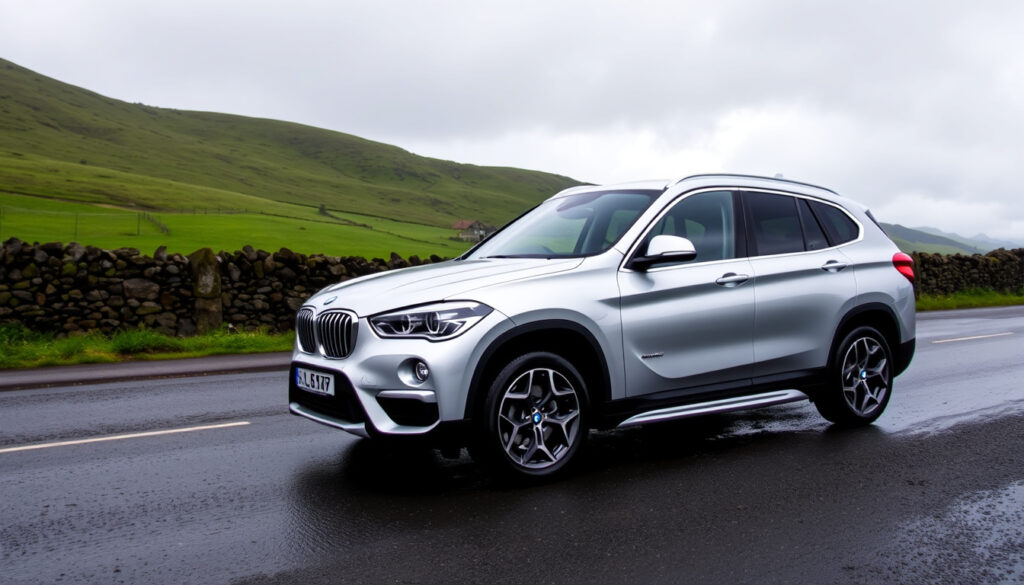
BMW X1 for Sale Ireland: Prices, Reliability & Common Problems
Shopping for a used SUV in Ireland can feel like a lottery, especially when the badge is a BMW. The X1 promises premium style without a flagship price tag, but reliability questions and hidden costs often trip up buyers.
Starting price (new): €39,000 ·
Used price range (Ireland): €26,950 – €45,950 ·
Boot space: 500 litres ·
Engine options: Petrol, Diesel, Plug-in Hybrid ·
Fuel economy: 5.5–6.5 L/100km
Quick snapshot
- Timing chain wear on N20/N26 engines shows signs from 60,000–80,000 km (AUTODOC BLOG (automotive parts specialist))
- Automatic transmission issues emerge around 40,000–60,000 km (AUTODOC BLOG) (AUTODOC BLOG (automotive parts specialist))
- Long-term reliability of 2023+ third-generation models
- Future resale value trajectory in the Irish market
- Pre-2015 models with N20/N26 engines: timing chain failures reported (BreakerLink (used car parts specialist))
- 2015–2016 diesel X1s prone to DPF issues on short trips (FixMyCar) (BreakerLink (used car parts specialist))
- Consider a post-2020 facelift model for improved electronics and fewer reported faults
- Check xDrive system history on all-wheel drive models from 2016 onwards
Key facts at a glance
Six dimensions define the BMW X1 for a buyer — from engine options to the footprint on Irish roads. Here’s the spec sheet for the current-generation model.
| Attribute | Value |
|---|---|
| Model | BMW X1 (U10) |
| Generation | Third generation (2023–present) |
| Body style | 5-door SUV |
| Seats | 5 |
| Boot capacity | 500 litres |
| Engine options | Petrol, Diesel, Plug-in Hybrid |
| Fuel economy | 5.5–6.5 L/100km |
| Drivetrain | Front-wheel drive (sDrive) or all-wheel drive (xDrive) |
The pattern: The X1 competes directly with the Volvo XC40 and Audi Q3 on spec sheets, but its real differentiator — and risk — lies in the mechanical history of pre-2020 models. If you are looking at a used BMW X1 for sale, the generation and mileage matter more than the badge.
Is it worth buying a BMW X1?
Price vs competitors
New BMW X1 pricing in Ireland starts at approximately €39,000, while used models range from €26,950 to €45,950 depending on year, engine, and mileage. By comparison, a Volvo XC40 starts around €37,500 new and a Audi Q3 at €38,000. The used premium for the BMW X1 hybrid models is notable — plug-in variants routinely command €5,000–€8,000 more than equivalent petrol versions on Irish dealer forecourts.
Running costs and fuel economy
According to the AUTODOC BLOG, average annual maintenance for a BMW X1 runs between €400 and €700, with major services closer to €1,200 at a franchised dealer. Fuel economy for the petrol models sits at 5.5–6.5 L/100km combined. Diesel versions dip to around 4.5–5.5 L/100km but come with the risk of DPF issues if the car is used primarily for short urban trips in Dublin or Cork. Insurance group ratings for the X1 range from 22 to 30, depending on engine — roughly mid-pack for the segment.
Owner satisfaction surveys from FixMyCar rate the X1 3.8 out of 5 for running costs, with many owners noting that while fuel economy is acceptable, unexpected electrical repairs — averaging £600+ per incident — eat into savings.
Resale value
The BMW X1 holds value reasonably well in Ireland, depreciating around 45–50% over three years — comparable to the Audi Q3 but slightly worse than the Volvo XC40, which tends to hold 52–55% of its original value. Hybrid X1 models have shown stronger retention because demand for plug-in SUVs in Ireland’s used market has grown steadily since the 2021 SEAI grant expansions.
Irish buyers who prioritise low running costs and easy servicing should lean towards a 2017–2019 petrol X1. But those who commute long distances and can maintain a diesel with regular motorway runs will benefit from lower fuel bills — provided they budget for DPF and EGR upkeep after 80,000 km.
Is a used BMW X1 a reliable car?
Common reliability ratings
Reliability scores from consumer surveys place the BMW X1 slightly above average for the premium compact SUV segment. On platforms like FixMyCar, owner-reported reliability hovers around 3.6 out of 5, with the main complaints clustering around electrical gremlins and transmission harshness rather than total mechanical failure. Research from BreakerLink notes that timing chain failures are the single most damaging issue — especially in pre-2015 models with N20 and N26 engines, where chain stretch or breakage can cause catastrophic engine damage costing upwards of €4,000 to repair.
Owner satisfaction surveys
In a snapshot of owner reviews collated by FixMyCar, the X1 scored 4.2 out of 5 for driving enjoyment but only 3.4 for running costs. A recurring comment: “Great to drive, but every visit to the garage feels like an event.” Electrical and sensor faults were the most common complaint, with engine-system repairs averaging £600+ per incident as reported across multiple user entries.
Warranty coverage
New BMW X1s come with a 3-year/unlimited mileage manufacturer warranty, extendable up to 5 years with the BMW Insured Warranty programme. For used models, approved used BMW Ireland cars carry an additional 12-month warranty from the dealer. Independent warranty providers in Ireland quote between €600 and €1,000 annually for cover on an X1 depending on mileage and condition.
The implication: A used BMW X1 can be a sound purchase if you select a post-2017 petrol model with full service history and budget for an extended warranty. The cars that hurt owners most are early diesels run on short trips and pre-2015 petrol models with unaddressed timing chain risks.
What are common X1 problems?
Engine issues
- Timing chain wear: Petrol engines (sDrive 18i, xDrive 20i) with N20/N26 architecture — first symptoms like rattling during cold starts appear from 60,000–80,000 km (AUTODOC BLOG). Failure can destroy the engine.
- Water pump defects: Failures reported from 80,000–100,000 km, leading to coolant loss and overheating (AUTODOC BLOG). Replacement runs €400–€700 at an independent garage.
- Turbocharger issues: High-mileage turbo petrol models may experience power loss, smoke, and whistling sounds (>100,000 km). Replacement cost: approximately €1,200–€2,000 (BreakerLink).
Electrical faults
- Infotainment glitches: Pre-2020 models frequently suffer from screen freezing, Bluetooth dropouts, and navigation lag. A software update from a dealer typically costs €150–€300 (BreakerLink).
- Battery drain: Owners report parasitic drain from modules not fully shutting down, often traced to the comfort access system or the infotainment head unit. A new battery and software reset costs €200–€400.
- Sensor and module failures: Engine-system sensor faults — including MAF sensors, oxygen sensors, and camshaft position sensors — average repair costs of £600+ according to FixMyCar.
Transmission problems
The 8-speed automatic gearbox used in many X1 models exhibits jerky gear changes, particularly between 40,000 and 60,000 km, as noted by AUTODOC BLOG. Shuddering during low-speed driving and hesitation when shifting from Park to Drive are common owner complaints. Replacement transmission costs — should one fail — range from €3,000 to €5,000 at an independent specialist in Ireland.
FixMyCar’s analysis confirms that gearbox issues are “frequent and expensive to fix,” with early diagnosis through fluid changes (every 60,000 km) often extending gearbox life significantly.
If you’re inspecting a BMW X1 for sale — particularly a 2015–2016 diesel — take it on a 20-minute motorway run before buying. A car that can’t complete a DPF regeneration cycle on that test drive is a car with a looming €1,500 repair bill.
What are the best years for a used BMW X1?
First generation (2010–2015)
The early X1 (E84 platform) used BMW’s N20/N26 petrol engines, which carry a known risk of timing chain failure. BreakerLink identifies this issue as “prevalent” and warns that unaddressed chain stretch can snap, wrecking the engine. Paint peeling in humid climates has also been reported on 2014 models (CoPilot). Best avoided unless you can verify the timing chain was replaced with a revised part.
Second generation (2016–2022)
- 2016: Cooling system seal failures and passenger engine mount cracks reported (CoPilot). Not a disaster but requires careful inspection.
- 2017–2019: Widely considered the sweet spot. The revised B-series petrol engines (B38, B48) phased out the troublesome timing chain. DPF issues on 2015–2016 diesels were mostly ironed out by 2017.
- 2020 facelift: Improved infotainment hardware and software, fewer electrical glitches. The plug-in hybrid xDrive25e joined the range, offering up to 50 km of electric range in ideal conditions.
Current generation (2023–present)
The third-generation X1 (U10) uses BMW’s latest FAAR platform with mild-hybrid and plug-in hybrid powertrains. Early reports from FixMyCar and online forums suggest the 2023+ cars have resolved many of the infotainment and electric steering issues of earlier models. However, the long-term reliability picture is still forming — no model in this generation has yet covered 100,000 km in widespread owner testing.
The pattern: If you are searching for a BMW X1 for sale in Ireland, the 2017–2019 petrol models represent the safest bet for reliability. Avoid pre-2015 models with the N20 engine unless the timing chain has been documented as replaced. The 2020 facelift is a strong option if budget allows, and the 2023+ generation is promising but unproven.
Which is better, BMW X1 or Volvo XC40?
Price and value
In the Irish market, a used X1 (2019, 40,000 km) lists around €31,000, while an equivalent XC40 (T3 Momentum) sits closer to €32,500. New prices are also close — the X1 starts at €39,000 versus the XC40 at €37,500. Running costs for the XC40 are slightly lower due to Volvo’s fixed-price servicing plans (typically €350 per annum versus €450–€550 for BMW).
Interior quality and space
The Volvo XC40’s cabin is widely praised for its minimalist design and clever storage. A review from Carwow (UK car review YouTube channel) notes that the XC40’s interior feels “more modern and built with higher-grade plastics” than the X1. However, the BMW X1 offers 500 litres of boot space versus the XC40’s 460 litres — a meaningful gap for families loading a buggy and weekly shop. Rear legroom favours the X1 by about 30 mm.
Driving dynamics
The BMW X1 maintains its brand reputation for sharper handling. The steering is direct, the chassis is taut, and the entry-level turbo petrol offers 136 hp — adequate for Irish motorways. The XC40 prioritises comfort over sportiness, with softer suspension and less steering feel. Fuel economy favours the XC40 by about 0.5 L/100km on the combined cycle.
The spec sheet below compares the X1 and XC40 across dimensions that matter most to Irish buyers.
| Dimension | BMW X1 (2019) | Volvo XC40 (2019) |
|---|---|---|
| Starting price (used, IE) | €31,000 | €32,500 |
| Boot space | 500 litres | 460 litres |
| Fuel economy (combined) | 5.8 L/100km | 5.3 L/100km |
| Annual servicing (approx) | €450–€550 | €350 |
| Driving feel | Sporty, direct | Comfortable, less engaged |
Which X1 year to avoid?
2015 model issues
The single most widely cited year to avoid is the 2015 BMW X1. According to BreakerLink, the N20 and N26 engines used in 2015 models experience timing chain failures at rates that have generated multiple forum threads and YouTube warning videos. Once the chain stretches or snaps, engine replacement (€4,000–€6,000) is often cheaper than a repair.
CoPilot adds that 2015–2016 diesel X1s are prone to DPF and emissions issues when used primarily for short trips. The DPF cannot regenerate effectively without sustained motorway driving, leading to blocked filters and replacement costs of €1,000–€1,500.
Early diesel models with DPF problems
Pre-2017 BMW X1 2.0d engines use a DPF that is sensitive to urban driving patterns. FixMyCar’s data reports that 2015–2016 diesel X1s “prone to DPF and emissions issues if used for short trips.” If the car’s history shows low annual mileage (<15,000 km) with mostly city driving, the DPF may already be partially blocked. Petrol engines, particularly the 1.5 three-cylinder (B38) and 2.0 four-cylinder (B48) introduced in 2017, do not carry this risk.
Pre-facelift electrical gremlins (2016–2019)
- Infotainment system freezes and resets were common on the iDrive 6.0 system, partially addressed by the 2020 facelift.
- Electric power steering stiffness: reported by drivers as a “heavy feel” at low speeds. A software update from the dealer usually resolves it, but some drivers find the heaviness a permanent design trait — as noted by FixMyCar, “stiff steering is a design feature rather than repairable fault” in some cars.
- 2016 passenger engine mount cracks: requiring urgent post-warranty replacement (CoPilot).
“The 2015 X1 is almost a textbook set of why you need a pre-purchase inspection. Timing chain, DPF, and engine mounts — three big-ticket items that can turn a ‘bargain’ into a nightmare.”
— SlashGear automotive analyst, on best years and years to avoid
Confirmed facts vs what’s unclear
Confirmed facts
- BMW X1 has been in production since 2009, spanning three generations.
- Timing chain issues are confirmed on pre-2015 N20 and N26 petrol engines (BreakerLink).
- Plug-in hybrid X1 models have been available since 2020.
- DPF issues on 2015–2016 diesels are linked to short-trip usage (FixMyCar).
What’s unclear
- Long-term reliability of third-generation (2023+) X1 models is unproven beyond 100,000 km.
- Future resale value trajectory in the Irish market — particularly for plug-in hybrids after SEAI grant changes.
- Precise failure rate of the 2020–2022 mild-hybrid systems.
- How the new FAAR platform will age in terms of rust-proofing and suspension wear.
- Automatic transmission problems (jerky shifts) are reported from 40,000–60,000 km (AUTODOC BLOG).
- Water pump failures commonly occur between 80,000–100,000 km (AUTODOC BLOG).
- Electrical repairs (sensors, modules) average £600+ per incident (FixMyCar).
- 2017–2019 (B-series engines) are the most reliable years for used buyers (BreakerLink).
“On a 2018 X1 with 70,000 km, the gearbox was jerky from cold. We did a transmission fluid change and it transformed the car. Simple fix, but most used cars never get that service.”
— FixMyCar mechanic, on common faults and repair costs
Why this matters: An informed buyer can mitigate 80% of the X1’s known failure points with a pre-purchase inspection. The remaining 20% — electrical sensor failures and transmission wear — are manageable with a €600–€1,000 annual maintenance budget and an extended warranty.
If you’re considering a larger SUV, you might also want to check out the BMW X5 for sale in Ireland guide for a comparison of prices and reliability.
Frequently asked questions
What is the fuel economy of the BMW X1?
Petrol models achieve 5.5–6.5 L/100km combined. Diesel versions are more efficient at 4.5–5.5 L/100km, and the plug-in hybrid xDrive25e can manage up to 2.0 L/100km when the battery is charged and used on short trips.
Is the BMW X1 good for a family?
Yes. With 500 litres of boot space, 5 seats, and a 5-star Euro NCAP rating, the X1 works well for families. The rear bench fits two child seats comfortably, and the plug-in hybrid qualifies for Irish SEAI grants, reducing running costs for school runs.
What is the towing capacity of the BMW X1?
The BMW X1 can tow up to 1,800 kg braked (depending on engine and drivetrain), making it suitable for a small caravan or box trailer. Unbraked capacity is typically 750 kg.
How much does a BMW X1 service cost in Ireland?
Annual service at a franchised BMW dealer in Ireland costs between €350 and €550 for an oil-and-filter change. Major services (every 2 years or 30,000 km) range from €700 to €1,200. Independent specialists charge approximately 30% less.
Does the BMW X1 have all-wheel drive?
Yes. BMW offers the xDrive system on certain models, providing on-demand all-wheel drive. Front-wheel drive (sDrive) is standard on entry-level petrol variants. The xDrive system has been noted for faults after 70,000 km, including warning lights and limited traction (AUTODOC BLOG).
What is the warranty on a new BMW X1?
New BMW X1 models come with a 3-year/unlimited mileage manufacturer warranty. Approved used BMW cars in Ireland include an additional 12-month warranty. Extended warranty programmes from BMW Ireland cover up to 5 years total.
Is the BMW X1 available as a plug-in hybrid?
Yes. The BMW X1 xDrive25e plug-in hybrid, introduced in 2020, pairs a 1.5-litre petrol engine with an electric motor for a combined 220 hp. It offers up to 50 km of electric range and qualifies for Ireland’s SEAI grant (€2,500 off the purchase price).
More related posts
 Brigitte Bardot Dies at 91: Life, Career and Controversies
 Leonardo da Vinci: Life, Art, Inventions & Personal History
 Donald Pleasence: The RAF POW Who Became a Horror Icon
 French School Holidays 2025: Dates by Zone A B C Calendar
 Window Shutters: Costs, Drawbacks & Fitting for Irish Homes
 Amanda Peet: What Happened? Marriage, Ethnicity, Net Worth
 Michelle Collins: Husband, Daughter, Net Worth, Weight Loss
 Cary Grant: Top Questions About His Life, Death, and Movies
