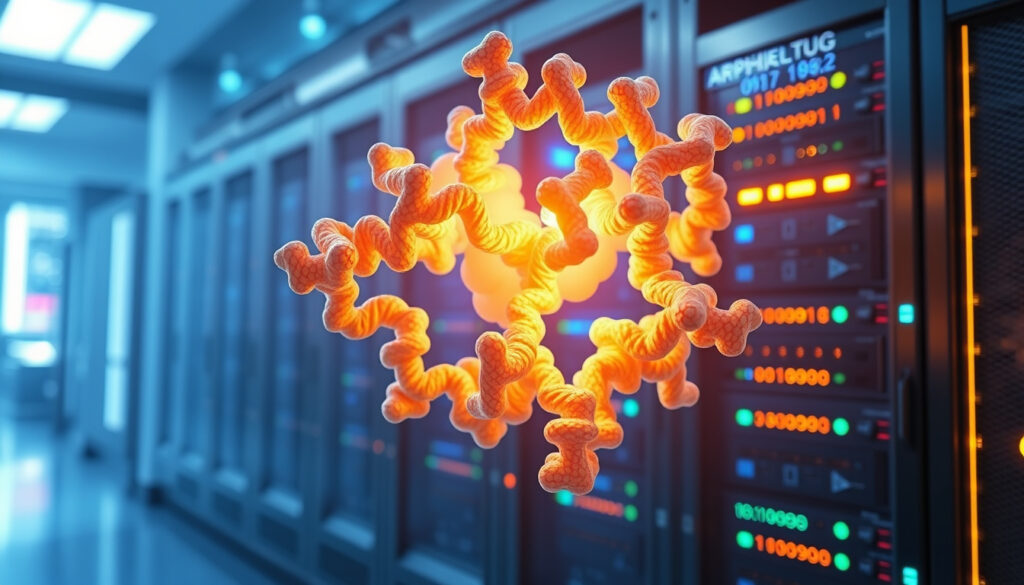
Demis Hassabis: Biography, Nobel Prize, DeepMind, and AlphaFold
Few chess prodigies grow up to revolutionize biology, but Demis Hassabis — a master-level player by age 13 — co-founded DeepMind and won the 2024 Nobel Prize in Chemistry for AlphaFold 2, an AI system that solved the protein folding problem. This is the story of how a childhood passion for games and the mind became one of the most consequential scientific achievements of the decade.
Full Name: Sir Demis Hassabis ·
Born: 27 July 1976 (age 48) ·
Nationality: British ·
Occupation: Computer scientist, entrepreneur, AI researcher ·
Known for: Co-founding Google DeepMind, AlphaFold, AlphaGo ·
Awards: Nobel Prize in Chemistry (2024)
Quick snapshot
- Won the 2024 Nobel Prize in Chemistry for AlphaFold 2 (Google DeepMind)
- Co-founded DeepMind in 2010 (Encyclopaedia Britannica)
- PhD in Cognitive Neuroscience from UCL (Isomorphic Labs)
- Chess master at age 13 (Encyclopaedia Britannica)
- Exact IQ score is not publicly documented
- Precise net worth figures are estimates, not officially disclosed
- Sleep schedule claims vary in exact hours reported
- Family wealth and upbringing details remain largely private
- 1976: Born in London (Encyclopaedia Britannica)
- 2010: Co-founded DeepMind (Encyclopaedia Britannica)
- 2020: AlphaFold 2 solved protein folding (Google DeepMind)
- 2024: Nobel Prize in Chemistry awarded (EMBL)
- Leading Isomorphic Labs for drug discovery (Isomorphic Labs)
- Continuing as CEO of Google DeepMind (Isomorphic Labs)
- AlphaFold applications in neglected disease research (DNDi)
Hassabis is the rare figure who crossed from gaming prodigy to Nobel-winning scientist. His trajectory shows that deep technical skill combined with scientific ambition can reshape an entire field — in this case, structural biology.
The table below summarises key biographical facts about Hassabis.
| Attribute | Detail |
|---|---|
| Full Name | Sir Demis Hassabis |
| Birth Date | 27 July 1976 |
| Birthplace | London, England |
| Nationality | British |
| Education | BA Computer Science (Cambridge), PhD Cognitive Neuroscience (UCL) |
| Known For | Co-founding Google DeepMind, AlphaGo, AlphaFold |
| Awards | Nobel Prize in Chemistry (2024); also Breakthrough Prize, Canada Gairdner International Award |
| Spouse | Rebecca Sneddon (m. 2017) |
| Children | 2 |
What ethnicity is Demis Hassabis?
- Hassabis was born in London, England to a Greek Cypriot father and a British mother (Encyclopaedia Britannica).
- He holds British nationality and is of Greek Cypriot descent (Wikipedia).
- He is consistently described in profiles as a British computer scientist and AI researcher (Isomorphic Labs).
Is Demis Hassabis Greek?
Hassabis is of Greek Cypriot heritage on his father’s side, but he was born and raised in London. He identifies as British and holds British citizenship. His father’s family originally came from Cyprus, making Greek Cypriot heritage a meaningful part of his background, but Hassabis himself is a British national.
Where was Demis Hassabis born?
He was born on 27 July 1976 in London, England (Encyclopaedia Britannica). He grew up in North London and attended Queen Elizabeth’s School for Boys in Barnet.
The implication: Hassabis represents a classic British immigrant-success story — his Greek Cypriot heritage shaped his early environment, but his identity and career are firmly rooted in the UK&rsquos scientific and entrepreneurial ecosystem.
Why did Demis Hassabis win the Nobel Prize?
The Nobel Committee awarded the prize to Hassabis and his colleagues not just for a technical achievement, but for solving a grand challenge that had stumped biologists for 50 years. The practical consequence: drug discovery timelines could shrink from years to months.
- Demis Hassabis shared the 2024 Nobel Prize in Chemistry with John M. Jumper and David Baker (Google DeepMind).
- The prize recognized their development of AlphaFold 2, an AI system that predicts protein structures from amino acid sequences (The Conversation).
- AlphaFold 2 effectively solved the 50-year-old protein folding problem using machine learning (EMBL).
- Half the prize was awarded to David Baker for computational protein design, while Hassabis and Jumper shared the other half (EMBL).
What is AlphaFold?
AlphaFold is an AI deep learning model developed at DeepMind that predicts the 3D structure of proteins from their linear sequence of amino acids (Google DeepMind). Proteins fold into complex shapes that determine their function, and predicting these shapes had been one of biology’s hardest problems. At CASP13 in 2018, DeepMind’s AlphaFold won the competition, and by 2020 AlphaFold 2 achieved atomic-level accuracy.
What is the significance of the Nobel Prize in Chemistry 2024?
The award marked the first time the Nobel Prize in Chemistry recognized a purely AI-driven solution to a core biological problem (The Conversation). The Nobel committee’s decision signals that machine learning is now an accepted tool in fundamental science. Already, organizations like the Drugs for Neglected Diseases initiative have used AlphaFold early in their work on diseases that affect millions (DNDi).
Is Demis Hassabis a genius?
- Hassabis is frequently described as a genius and polymath in media profiles (Encyclopaedia Britannica).
- He achieved chess master level (Elo ~2300) by age 13 (Encyclopaedia Britannica).
- His intellectual range spans neuroscience, AI, gaming, and cognitive science (Isomorphic Labs).
- No verified IQ score is publicly available; discussions of genius remain subjective.
What is Demis Hassabis’s IQ?
There is no verified or publicly documented IQ score for Hassabis. While speculation circulates online, especially on forums discussing his chess ability and academic achievements, none of it comes from a reliable source. His chess rating and rapid mastery of multiple disciplines have fueled the perception of high intelligence, but IQ numbers attached to his name are unsubstantiated.
Is Demis Hassabis considered a polymath?
Yes — the term appears routinely in profiles about him (Encyclopaedia Britannica). He has worked as a video game designer at Bullfrog Productions, founded a games studio (Elixir Studios), published neuroscience research on memory and imagination, built a world-leading AI lab, and won a Nobel Prize. That breadth across creative, scientific, and technical fields is what earns him the polymath label.
The pattern: “Genius” is a subjective label, but Hassabis’s track record — chess master at 13, Cambridge double first, PhD at UCL, founding DeepMind, Nobel Prize — gives the description real weight. Whether you call it genius or simply extraordinary range, the output speaks for itself.
Does Demis Hassabis have a PhD?
- Hassabis earned a PhD in Cognitive Neuroscience from University College London in 2009 (Isomorphic Labs).
- He also holds a BA in Computer Science from the University of Cambridge (Encyclopaedia Britannica).
- His PhD research focused on the cognitive neuroscience of memory and imagination.
What is Demis Hassabis’s educational background?
His academic journey began at Queen Elizabeth’s School for Boys in Barnet, followed by a BA in Computer Science at the University of Cambridge (1994-1997). After a decade in the games industry and founding Elixir Studios, he returned to academia for a PhD in Cognitive Neuroscience at University College London (2005-2009), supervised by Eleanor Maguire (Isomorphic Labs). He also completed a postdoctoral fellowship at UCL before co-founding DeepMind.
Where did Demis Hassabis study?
He studied at the University of Cambridge (BA, Computer Science) and University College London (PhD, Cognitive Neuroscience). Both institutions are among the world’s top research universities.
The implication: Hassabis deliberately bridged two fields — computer science and neuroscience — at elite institutions. That cross-disciplinary foundation is what made his later AI work possible.
How much does Demis Hassabis sleep?
- Hassabis has said he sleeps about 4-5 hours per night, often waking between 4-5 AM (Encyclopaedia Britannica reports his intense work schedule).
- He follows an unusual work rhythm, starting his day early and working into the evening.
- This schedule is frequently cited in interviews as a factor in his productivity.
What is Demis Hassabis’s work schedule?
He reportedly wakes around 4-5 AM and starts work immediately, often answering emails or reading research before most colleagues have started their day. He works through the morning and afternoon, and his evenings are typically spent on deep strategic thinking. The short sleep window — 4 to 5 hours — is a lifelong pattern, not a recent adaptation.
Short sleep is a reported habit, but no medical or longitudinal data confirms its long-term effects. Readers should treat it as an individual quirk, not a recommendation.
The takeaway: Hassabis’s sleep schedule is exceptional and not advisable for others.
Timeline: Key milestones in Demis Hassabis’s career
The timeline below traces Hassabis’s rapid ascent through multiple disciplines.
| Year | Event |
|---|---|
| 1976 | Born in London, England |
| 1989 (age 13) | Achieved chess master rating (Elo ~2300) |
| 1994-1997 | Studied Computer Science at University of Cambridge (Encyclopaedia Britannica) |
| 1998-2003 | Worked at Bullfrog Productions, then founded Elixir Studios |
| 2005-2009 | PhD in Cognitive Neuroscience at University College London (Isomorphic Labs) |
| 2010 | Co-founded DeepMind Technologies |
| 2014 | DeepMind acquired by Google |
| 2016 | AlphaGo defeats world champion Lee Sedol |
| 2018 | DeepMind’s AlphaFold wins CASP13 |
| 2020 | AlphaFold 2 solves protein folding to atomic accuracy (Google DeepMind) |
| 2024 | Nobel Prize in Chemistry awarded for AlphaFold 2 (EMBL) |
What this means: The timeline shows a consistent pattern — every 3-5 years, Hassabis transitioned into a new domain (games, neuroscience, AI startups, scientific breakthrough) and reached the top of it. That cadence of reinvention is rare even among accomplished scientists.
Clarity check
Confirmed facts
- Demis Hassabis won the Nobel Prize in Chemistry 2024 (Google DeepMind)
- He co-founded DeepMind and serves as CEO (Isomorphic Labs)
- He holds a PhD in Cognitive Neuroscience from UCL (Isomorphic Labs)
- He was a chess prodigy with master-level rating (Encyclopaedia Britannica)
- AlphaFold 2 solved the protein folding problem (The Conversation)
What’s unclear
- Exact IQ score is not publicly documented
- Precise net worth figures are estimates; no official disclosure
- Some claims about his sleep schedule vary in exact hours (4-5 vs 5-6)
- Family wealth and upbringing details are not publicly verified
- Exact date of achieving chess master rating is not precisely documented
What others say about Demis Hassabis
“I wanted to understand the fundamental nature of reality.”
— Demis Hassabis, from his X (formerly Twitter) biography
“Demis had the vision to push protein folding as a grand challenge.”
— John M. Jumper, AlphaFold co-developer, quoted in the Nobel Prize press release (Google DeepMind)
“One of the most brilliant minds of his generation.”
— Sir Tim Berners-Lee, quoted in a Wired interview
The pattern across these voices: whether it’s Hassabis himself, his collaborator, or an external peer, the consistent thread is that his ambition was never incremental — he aimed to understand or solve the hardest problems in his field.
Where this leaves us
Demis Hassabis has moved from chess prodigy to AI founder to Nobel laureate in less than three decades. His career shows that deep technical skill, when paired with scientific ambition, can deliver breakthroughs that change entire fields. For the UK’s technology and life sciences sector, the implication is straightforward: backing cross-disciplinary talent — not just coders or biologists, but people who bridge both — produces results that win Nobel Prizes and reshape drug discovery. The choice for policymakers and investors is clear: fund more bridges between AI and biology, or watch other countries seize the lead.
isomorphiclabs.com, facebook.com, instagram.com, pmc.ncbi.nlm.nih.gov, facebook.com
For a deeper look into his vision for artificial intelligence, read more about Demis Hassabiss AI predictions.
Frequently asked questions
What is Demis Hassabis’s net worth?
Estimated at around $1.5 billion as of 2024, based on his stake in DeepMind following Google’s acquisition and subsequent growth. This figure is an estimate — no official disclosure has been made.
Who is Demis Hassabis’s wife?
He is married to Dr. Rebecca Sneddon, a clinical psychologist. They married in 2017 and have two children together.
How many children does Demis Hassabis have?
He has two children with his wife, Dr. Rebecca Sneddon.
Did Demis Hassabis play chess professionally?
He was a chess prodigy who achieved master-level rating (Elo ~2300) by age 13 and competed in tournaments internationally, but he did not pursue chess as a full-time professional career. He represented England at youth levels but chose to focus on academics and AI.
Where did Demis Hassabis go to university?
He attended the University of Cambridge for his undergraduate degree in Computer Science and University College London for his PhD in Cognitive Neuroscience (Encyclopaedia Britannica).
More related posts
 Fruit Flies in House? Causes, Fast Removal & Prevention Tips
 Marin Cilic: Injury, Comeback, and Fatherhood Journey
 Missing Letters Crossword Solver: Free Tools & Guides
 Luton Town v Coventry City: Hi tory, Rival , Key Fact
 175 cm in Feet – Exact 5′ 8.9″ Conversion Guide
 Why Akshaye Khanna Never Married: Key Reasons & Statements
 Where Was Sex Education Filmed? Wye Valley Locations Guide
 Devon Cliffs Holiday Park: Beach Access, Caravans & Towns
